The mitochondria is not just the powerhouse.
The one line you learned in school is about ten percent of the story.
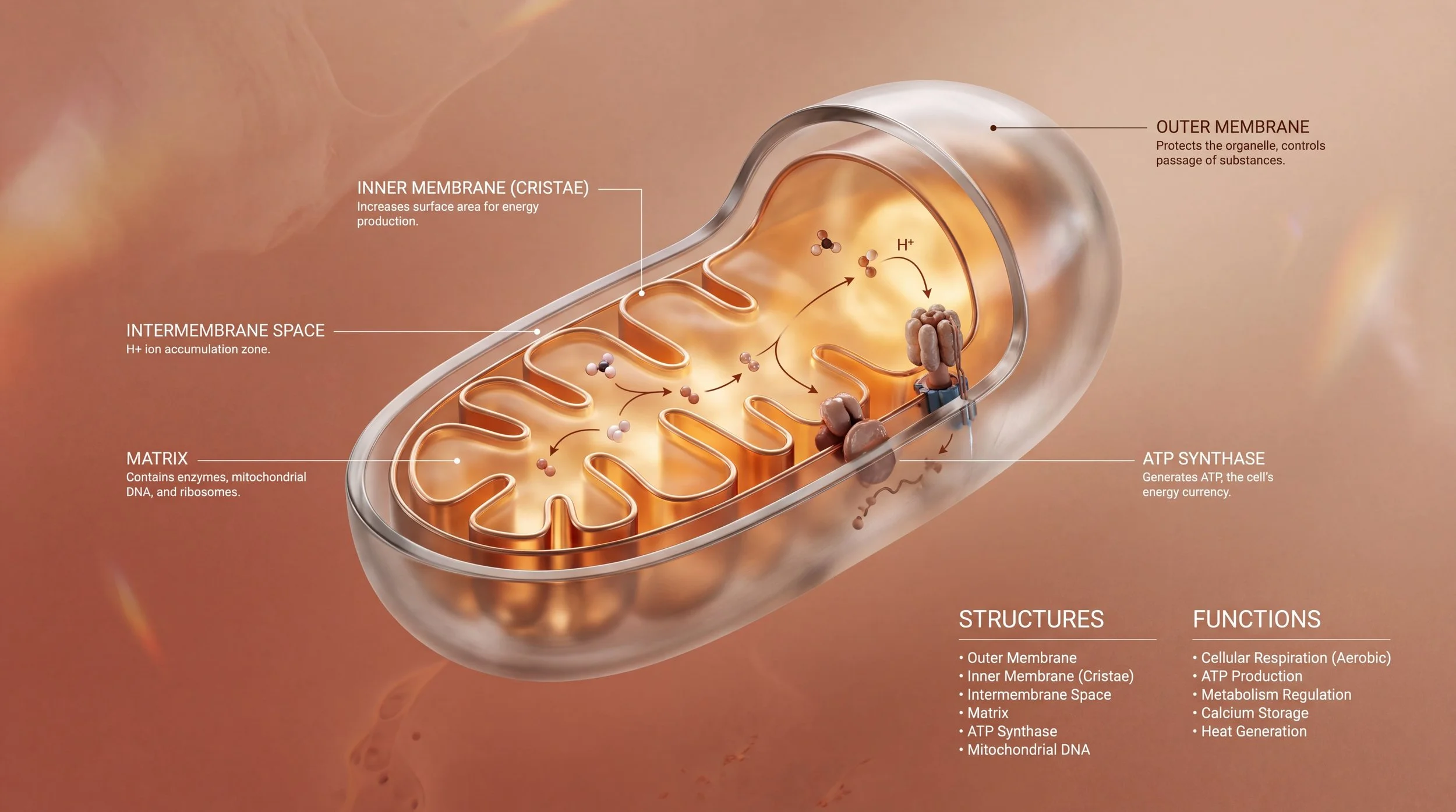
"The mitochondria is the powerhouse of the cell." You learned it in ninth grade, you can still recite it, and it is true. It is also about ten percent of the story.
Calling your mitochondria the powerhouse is like calling the CEO of a company the person who turns the lights on. Technically accurate. Wildly incomplete.

The decision-makers of the cell
Yes, your mitochondria make energy, the ATP that runs everything you do. But they are also the decision-makers inside your cells, and this is the part that changed how I see the body.
Your mitochondria hold the switch for whether a cell lives or dies. Through a process called apoptosis, they can sense danger and trigger a damaged cell's orderly shutdown to protect the rest of you. They shape your calcium signaling, which touches everything from a muscle contraction to the release of a neurotransmitter. And they are central to your immune response: when your body detects a threat, mitochondria help light the inflammatory fuse (Mehta et al., 2017). They are not the battery in the corner. They are closer to the boardroom.
Why you feel it everywhere
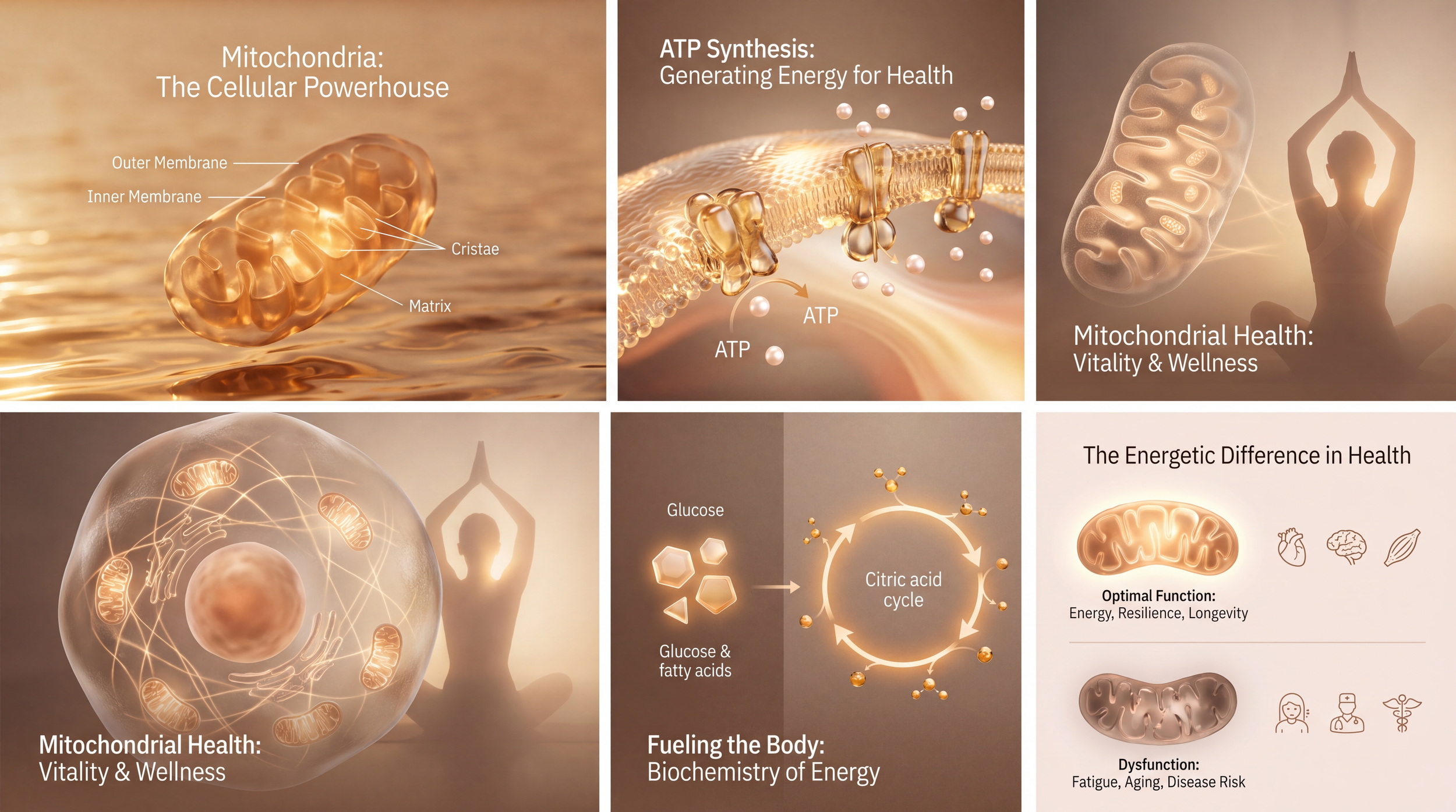
When mitochondria falter, it is not a quiet, local problem. It is felt body-wide. Mitochondrial dysfunction is now linked to Alzheimer's, Parkinson's, diabetes, heart disease, and depression, and it sits underneath a great deal of ordinary, unexplained fatigue and brain fog (Nunnari & Suomalainen, 2012; Marchi et al., 2023). When the engines that also run your decisions start to sputter, your whole self feels it.
Fun fact: beyond making energy, mitochondria are studied as decision-hubs of the cell, governing cell death, calcium signaling, and immunity, and their dysfunction is tied to fatigue and to metabolic and neurodegenerative disease.
Why I care about this so much
This is the heart of why I am so drawn to bioenergetics. Your cellular energy is not just about having pep in your step. It is the machinery that keeps you alive and keeps your cells making good decisions. When we sit you under red light, or move you, or help your nervous system settle, a great deal of what we are actually tending is this: the engines, and whether they have what they need to run.
Take care of the smallest engines, and the whole body has a fighting chance.
Tired in a way sleep does not fix is very often an energy story, and almost nobody looks there. That is exactly the work we do. Meet me in the Reading Room.
References
Mehta MM, Weinberg SE, Chandel NS. (2017). Mitochondrial control of immunity: beyond ATP. Nature Reviews Immunology, 17(10), 608–620. https://doi.org/10.1038/nri.2017.66
Nunnari J, Suomalainen A. (2012). Mitochondria: in sickness and in health. Cell, 148(6), 1145–1159. https://doi.org/10.1016/j.cell.2012.02.035
Marchi S, Guilbaud E, Tait SWG, et al. (2023). Mitochondrial control of inflammation. Nature Reviews Immunology, 23(3), 159–173. https://doi.org/10.1038/s41577-022-00760-x