Your gut is quietly running your hormones.
Why so many "hormonal" symptoms actually begin in the gut, and the enzyme almost no one checks.
If your cycle is a mess, or your skin, or your mood, or your weight, you have probably been told it is your hormones. Here's a cream, a pill, and a shrug on the way out the door.
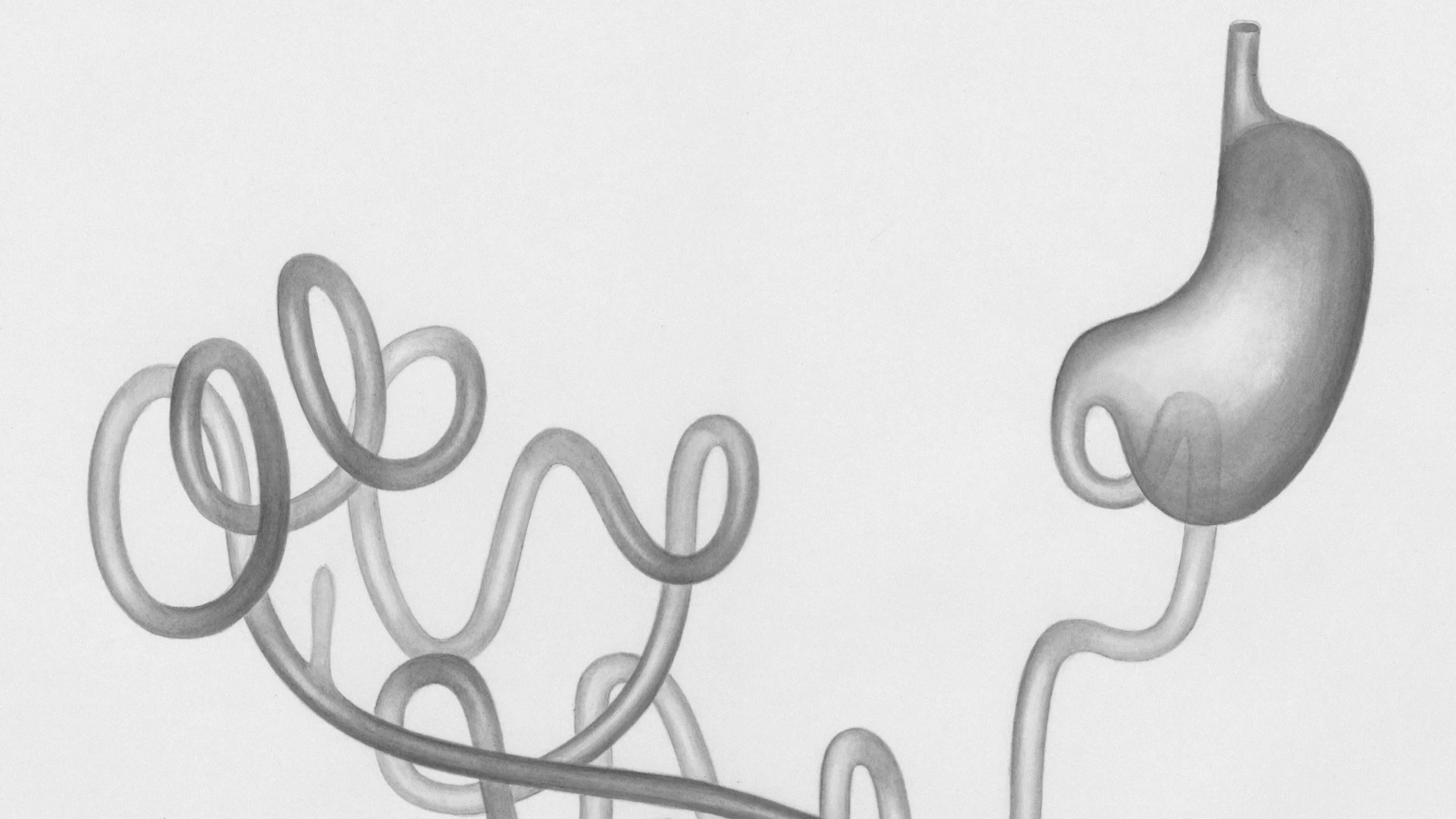
But hormones do not float around in a vacuum. A great deal of what your body does with estrogen is decided somewhere most people never think to look. Your gut.
The recycling loop no one told you about
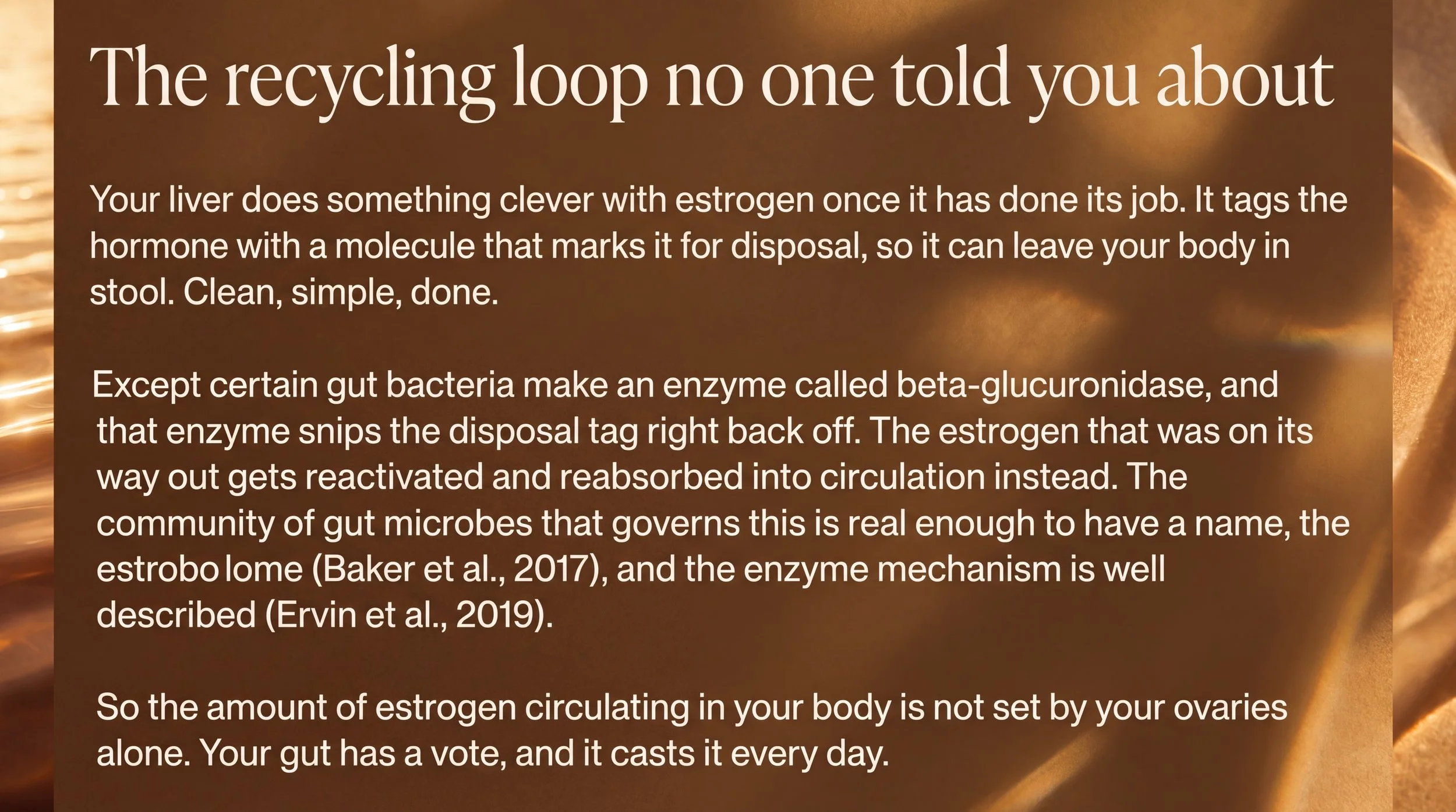
Your liver does something clever with estrogen once it has done its job. It tags the hormone with a molecule that marks it for disposal, so it can leave your body in stool. Clean, simple, done.
Except certain gut bacteria make an enzyme called beta-glucuronidase, and that enzyme snips the disposal tag right back off. The estrogen that was on its way out gets reactivated and reabsorbed into circulation instead. The community of gut microbes that governs this is real enough to have a name, the estrobolome (Baker et al., 2017), and the enzyme mechanism is well described (Ervin et al., 2019).
So the amount of estrogen circulating in your body is not set by your ovaries alone. Your gut has a vote, and it casts it every day.
Why constipation is a hormone problem
If that loop runs too hot, you recycle more estrogen than you should. If you are not clearing well, if you are constipated, it sits and gets reabsorbed. Over time this imbalance is linked to estrogen-driven conditions, including certain cancers and metabolic disease (Sui et al., 2021). "Eat more fiber" stops sounding like generic advice and starts sounding like hormone care, because that is what it is.
The same gut is talking to your appetite
It goes further. A standout member of this ecosystem, Akkermansia muciniphila, helps maintain your gut lining and triggers GLP-1, the very appetite-and-blood-sugar hormone the whole world is suddenly talking about (Yoon et al., 2021). The gut that manages your estrogen is also helping manage your hunger. It was never a coincidence that hormones and cravings travel together.
Fun fact: gut bacteria that make beta-glucuronidase directly influence how much estrogen your body reabsorbs, a system researchers call the estrobolome.
What this means for you
If you have chased a hormonal symptom in circles, this is a layer worth looking at. Not another diet, and not a promise. Just the honest truth that your hormones and your gut are one conversation, not two, and that supporting your clearance, your fiber, and your microbiome is supporting your hormones at the root.
Nothing in you works alone. That is not a flaw. It is the design.
If your labs say your hormones are "fine" and your body disagrees, that gap is exactly what we read. Meet me in the Reading Room.
References
Baker JM, Al-Nakkash L, Herbst-Kralovetz MM. (2017). Estrogen–gut microbiome axis: physiological and clinical implications. Maturitas, 103, 45–53. https://doi.org/10.1016/j.maturitas.2017.06.025
Ervin SM, Li H, Lim L, et al. (2019). Gut microbial β-glucuronidases reactivate estrogens as components of the estrobolome. Journal of Biological Chemistry, 294(49), 18586–18599. https://doi.org/10.1074/jbc.RA119.010950
Sui Y, Wu J, Chen J. (2021). The role of gut microbial β-glucuronidase in estrogen reactivation and breast cancer. Frontiers in Cell and Developmental Biology, 9, 631552. https://doi.org/10.3389/fcell.2021.631552
Yoon HS, Cho CH, Yun MS, et al. (2021). Akkermansia muciniphila secretes a GLP-1-inducing protein that improves glucose homeostasis. Nature Microbiology, 6(5), 563–573. https://doi.org/10.1038/s41564-021-00880-5